SPONSORED CONTENT

If you’ve been anywhere near a charging station, dealership, Reddit thread, or dinner table debate lately, you’ve heard the split. Half the country is convinced 2026 is finally the moment to ditch gas for good. The other half thinks you’d be crazy to buy an electric car right before the next big wave of upgrades hits.
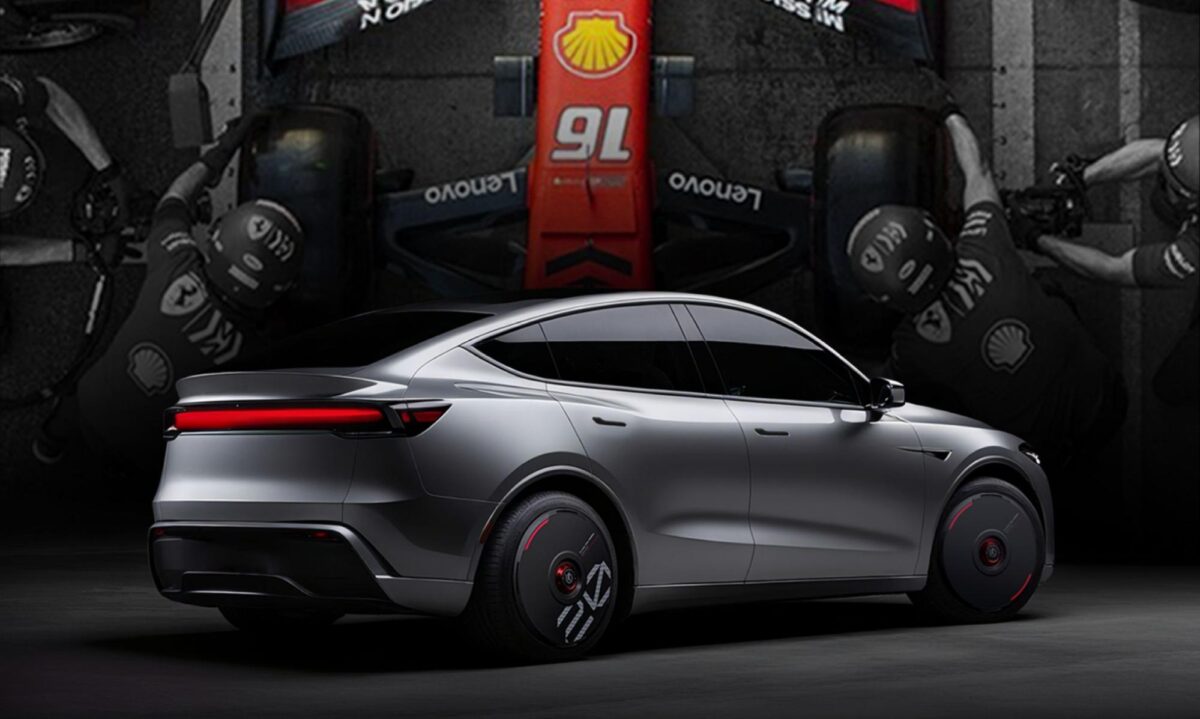
And the argument only gets louder when you see EV owners personalizing their rides with things like the HALODISC 2 wheel cover series because EV culture isn’t niche anymore; it’s mainstream. Which makes the timing question even more important: is now the right moment to jump in?
What makes this particular year so confusing is that the U.S. EV market is moving in two directions at once. Prices are dropping, finally making EVs accessible to normal shoppers but the tech inside those cheaper cars is on the edge of a huge transition.
Charging is about to become dramatically simpler but not every 2026 model will fully benefit. Incentives are still around but fewer cars qualify than last year. It feels like standing on the edge of a big moment and trying to guess whether you’re staring at a takeoff or a turbulence zone.
And that’s why 2026 could genuinely be the best year ever to switch, or the worst.
The Affordable EV Isn’t a Rumor Anymore
Remember when the mythical $30,000 EV felt like Bigfoot? Everyone claimed it was coming, but you never actually saw one. That era is over. Chevrolet, Ford, Hyundai, Kia, and even Tesla are preparing EVs priced in the low-to-mid $30k range, and these aren’t compromised econoboxes. They’re real cars, with real range, built for real American families.
This is the first time U.S. buyers can look at an EV and say, “Yeah, that actually fits my budget.”
The timing is beautiful and also slightly cruel because just as these accessible models arrive, the technology underneath them is about to take a generational step forward. And as these more affordable EVs hit the market, accessories like the HALODISC 2 wheel covers allow owners to personalize their cars without spending a fortune. Whether it’s the understated RTP for a sleek, planted look or Custom Numbers for personal flair, these covers make the car feel more “yours”.
NACS Is About to Change Everything
Charging has always been the part of EV ownership that felt like a gamble. Sometimes it works beautifully, sometimes it works eventually, and sometimes it works “if you jiggle the plug and pray.”
Then came the biggest plot twist in the industry: nearly every major automaker agreed to adopt Tesla’s NACS connector.
By 2026 and 2027, new EVs from Ford, GM, Rivian, Mercedes, Honda, Hyundai, and others will plug directly into the Supercharger network, the most reliable fast-charging infrastructure in the U.S.
But this transition year is messy.
Some 2026 models will ship with NACS built in.
Some will rely on adapters.
Some won’t gain full charging access until software updates roll out.
Buy too early and you might end up with a car stuck in the “in-between” phase of America’s charging revolution.
Incentives Are Still Around… but They’re Getting Weird
Federal tax credits remain a game-changer when a model qualifies. And that’s the tricky part now. New sourcing rules have cut eligibility for several best-selling EVs, and automakers are still shuffling supply chains to satisfy requirements.
In 2026, the situation looks like this:
- A car might qualify early in the year, then lose eligibility.
- Another might not qualify now but will once a U.S. battery plant opens.
- Some models may qualify inconsistently depending on trim.
For buyers, this means the exact same car could swing in price by up to $7,500 depending on whether you buy in January or August—and none of it has anything to do with you.
The Price War Isn’t Over Yet
Tesla fired the first shots back in 2023 and 2024, slashing prices and forcing the rest of the industry to react. Now we’re watching the next wave unfold. Automakers are preparing new battery plants, new EV platforms, and cheaper components and competition is only getting fiercer.
Some analysts think EV prices will bottom out between 2025 and 2027. Others say the bottom is already here. The truth is probably somewhere in the middle. Several industry forecasts expect battery costs to drop another 5–10% in 2026, which means EV sticker prices may still have room to fall—one more reason shoppers are torn between buying now or waiting.
Which means buying an EV in 2026 could either make you feel incredibly smart or slightly undercut.
That uncertainty alone is enough to keep some people waiting and others rushing to buy before the market shifts again.
So… Is 2026 the Moment or the Mistake?
If you’re the kind of driver who values stability, predictable charging, mature software, a wide selection of models, and a clear understanding of real-world costs then 2026 finally feels like the year EVs became “normal cars.” That alone makes switching attractive.
But if you’re someone who always wants the best version of whatever you buy, the newest connector, the next-gen battery, the lowest possible price, the cleaner incentives picture, waiting a year or two could easily pay off.
The truth is, 2026 sits right in the middle of the EV world growing up and the EV world transforming again. It’s a rare year where neither choice is wrong, but both require a little courage.
Are you the person who jumps now because the cars finally make sense?
Or the person who waits because the next chapter is going to be wild?
That’s the real question for 2026.
About the Author