
In this week’s Ask Nathan:
- Did the President of the United States just “OK” tiny kei cars to be imported here?
- Is the Volvo V60 Cross Country the last of a dying breed?
This week’s first question comes from a friend who heard about President Trump’s comment about liking (and wanting) small cars from Japan.
Q: RE: (Paraphrased) Did Trump just give us the green light to import kei cars?
Heard about President Trump’s recent remark about liking, and wanting, small cars from Japan. The comment made waves based on America’s shifting automotive tastes, and the persistent tension between U.S. manufacturing priorities and the popularity of imported compact cars.
I know I want a inexpensive and cute car to drive that’s fun and practical. Does the rest of the country feel the same way? Judging by the amount of pickup trucks sold here, I doubt it.
— Stan from Starbucks

A: Context…it’s about context.
I try to avoid politics, and this topic is dripping with political (and social) turmoil. Rather than dissect the politics, we can look at the automotive context. For decades, Japanese automakers have excelled at building small, efficient, durable cars… even as American buyers moved toward trucks and SUVs. So anytime a public figure talks about returning to small Japanese cars, it reminds people of the era when Civics, Corollas, and Sentras dominated the streets – and when the U.S. market demanded them in huge numbers.
You can read more about the President’s announcement here.
The thing is: Kei cars and trucks are currently outlawed in a variety of states, and cannot pass a variety of safety and DOT requirements. Additionally, the whole “Chicken tax” issue further prevents them from entering our market. There are loopholes for older models in some states, and we (TFL Studios) even own a kei truck that we use at Tumbleweed Ranch. Additionally, we helped spotlight the issue in Colorado, and upcoming legislation should pave the way for some form of legal ownership of older kei trucks.

What are kei vehicles?
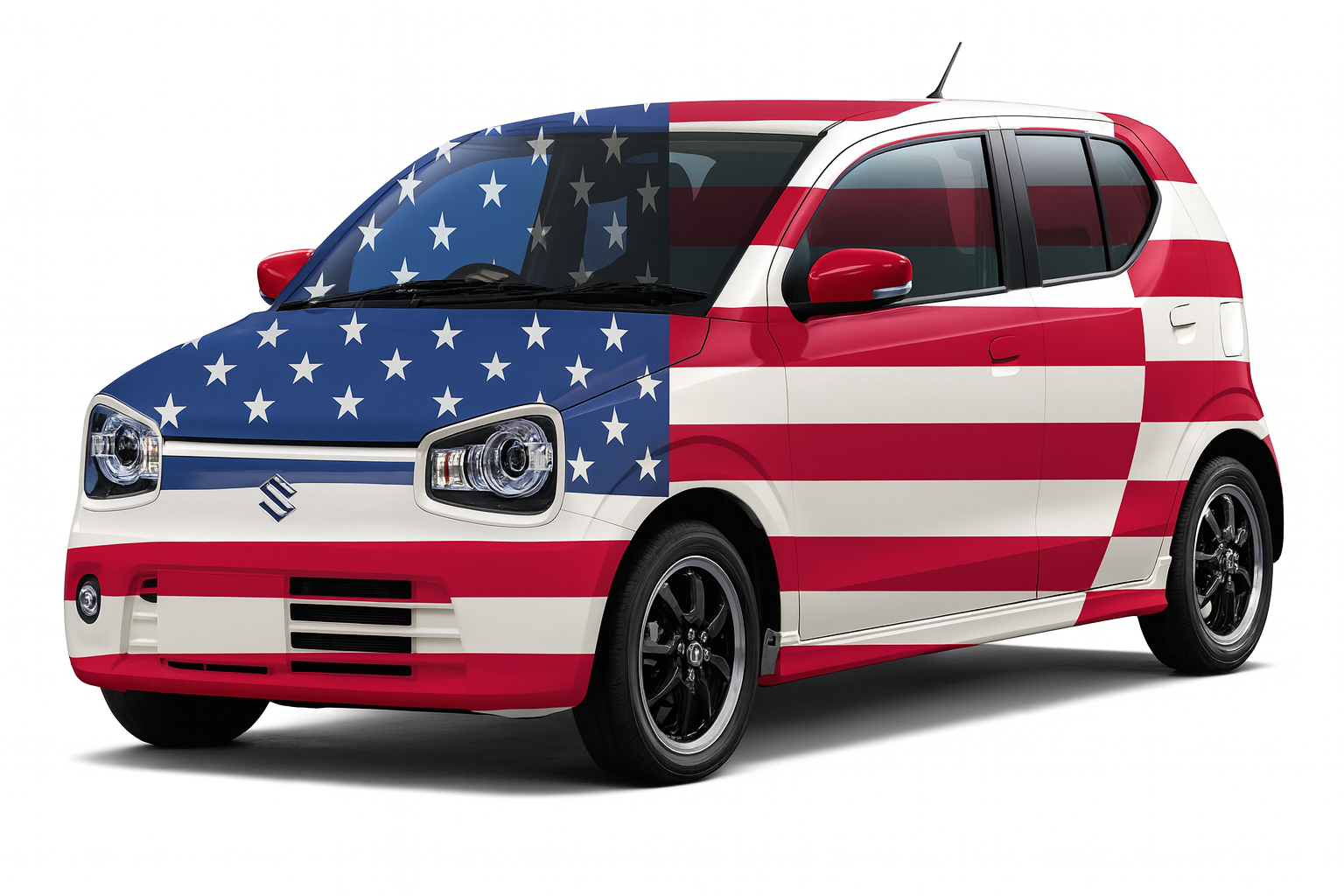
If you’ve spent more than 10 minutes watching Japanese car culture videos, you already know the appeal. kei cars (short for keijidōsha, or “light vehicle”) are Japan’s smallest road-legal passenger vehicles, defined by strict regulations:
- Max length: About 134 inches
- Max width: 58 inches
- Max height: approximately 79 inches
- Max engine size: 660cc
There are other restrictions, but the whole point is for owners to have lower annual road taxes. Reduced insurance premiums. Cheaper mandatory inspections, and in some cases, highway toll discounts. Additionally, these vehicles are remarkably efficient, both in terms of economy and usage of space. These benefits, combined with their small size ideal for narrow Japanese streets, have made Kei vehicles extremely popular, accounting for a significant percentage of new car sales in Japan.
They are also ridiculous fun to drive. I’m a big ape, but any opportunity that pops up for me to get behind the wheel of one, and I’ll take it. I’ve driven about a dozen in my lifetime, and would have driven more – but there were times when I didn’t fit. Despite all of this, I understand the limitations of these vehicles on American roads. They are simply too slow and narrow for safe cross-country traveling (on a public scale), and it’s hard to argue safety when a majority of Americans prefer trucks that weigh over 6,000-lbs.


How about smaller, affordable cars and trucks built here…that people want?
Now, rather than poo-poo the idea completely: think about the potential for U.S. automakers to find ways of going back to smaller, affordable cars. Right now, the smallest cars sold in the United States are Fiat 500es, Mini Coopers and vehicles like the Mazda MX-5 Miata. Ah, but in terms of vehicles built in the United States, like the President wants – it’s hard to find anything smaller than a Honda Civic (Ohio) or Toyota Corolla (Mississippi). Those are giant compared with a kei car.
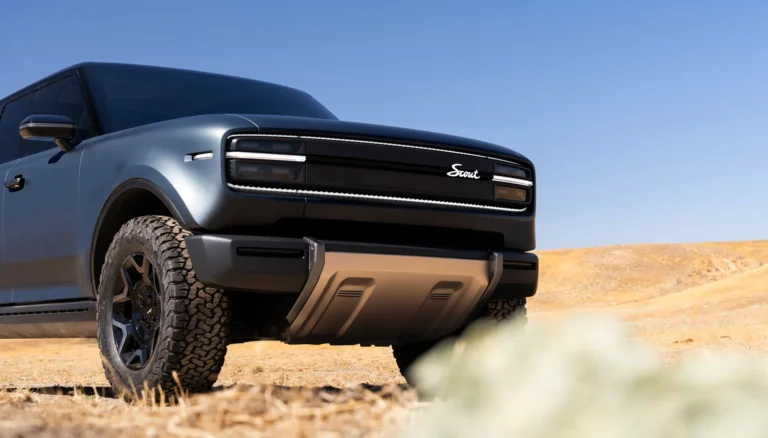
Soon, the tiny SLATE pickup truck will begin production, but it’s still about 40-inches longer than a kei vehicle. Still, I think that a mix of electrification and range extenders are a proven way to pack a powertrain into a small package, and satisfy DOT requirements. The tech is already available, and some of it is fairly affordable. All new powertrains are less likely; I doubt Ford is running out to develop a tiny two-stroke EcoBoost, but it would be cool.
Given that the President has recently pulled back some EPA requirements, allowing some automakers to slow their push for greater efficiency, the impetus for building remarkably economical vehicles like the kei car appears to be lacking. “Cute” cars are one thing, but scaling down commuters to micro size seems unlikely.
— N
The last question comes from Facebook (@NathanAdlenJournalist), and it’s coming from a fan who’s considering a Volvo V60 Cross Country.

Q: (Via: Nathan Adlen Journalist Facebook) RE: Is there another wagon as cool or useful as the Volvo V60 Cross Country?
Nathan.
I own a 2015 Volkswagen Golf SportWagen and it is one of the best cars I’ve ever owned. Now that I have over 200,000 miles on it and after a few fender benders, it’s time to retire the old girl. My boss drives a Volvo V60 Cross Country and lets me drive it all the time. He knows that I love station wagons and hate SUVS. It’s really fast and has just enough space for my bike and my dog “BeeBee.”
Are there any alternatives you would recommend for the price? Have you driven one of these before? Please let me know because I’m going to pull the trigger this upcoming spring!
Thanks!
— Gingee
A: Great choice!
Yea, I liked the VW Golf SportWagen so much, I had my wife test it out. In the end, we got a Mini Cooper Countryman simply based on its performance and she liked its personality. I wanted the VW. As for the V60 Cross Country? I adore that car, even with its minor flaws (the UX is a pain, and it’s kind of expensive).
Still, it has outstanding performance, a comfortable interior and it is indeed ideal for dog lovers. I keep telling people who claim they live for their poochies, yet own towering SUVs that they make it hard on their older dogs to simply get into the thing. Minivans are the best, in that case, but they are not fun to drive. Thus, station wagons are the way to go. They are lower, sleek and still remarkably utilitarian. Plus, it’s easier to reach the roof if you use it for cargo, as many do.
Regarding the competition: two vehicles come to mind. On the lower end, the 2026 Subaru Outback Wilderness or Touring XT. They are approximately $5,000 – $10,000 less expensive, yet provide very good traction, utility and safety in an all new wrapper. On the higher end, the Audi A6 Allroad Quattro, which is about $10,000 – $15,000 more expensive than the Volvo.
It is a fantastic ride, with a truly athletic personality that meshes well with its utilitarian nature. Sure, there are a few other examples, like the Mercedes-Benz E450, which is amazing, but that competes at an even higher level. That’s just about it – station wagons in the US are a dying breed.

Very few wagons are still selling here. Sadly.
I love the Volvo’s powertrain and suspension setup. It’s a mild hybrid that makes 247 horsepower and 250 lb-ft of torque, while still providing 26 mpg combined. The 8-speed automatic transmission is smooth, and the handling is surprisingly sporty for a vehicle that has a higher stance. It doesn’t hold quite as much as the Audi, and far less than the Subaru. It looks uniquely Swedish inside, and some feel like the seats are a bit stiff.
If possible, I would try to test drive the Volvo against the Subaru and the Audi. They are all outstanding, but they have unique driving personalities.
Hope that helps!
– N
About the Author