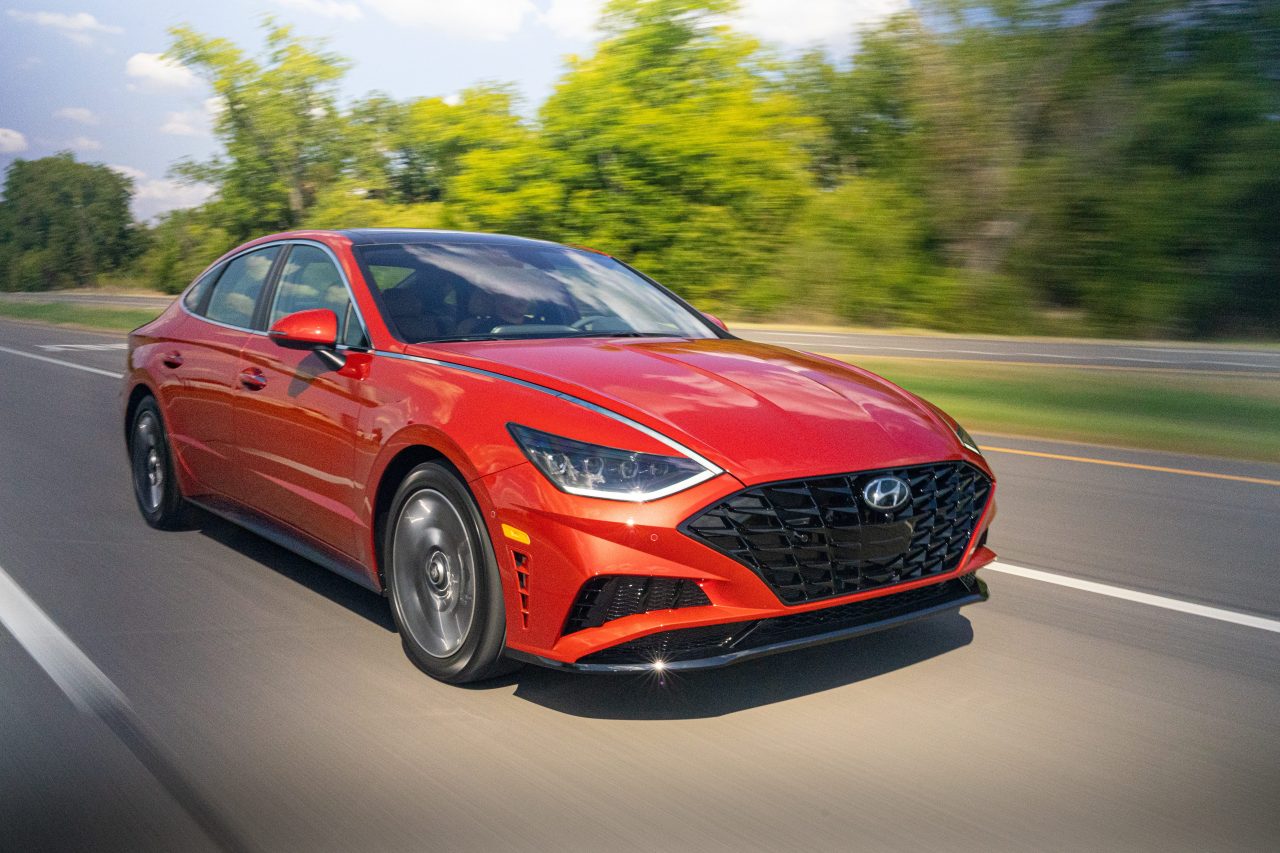

Some Sonata models may suffer a leak and potential fire due to a deformed fuel tank.
Hyundai recently recalled 85,043 Sonata sedans between the 2020 and 2023 model years for the fuel tank potentially expanding, coming into contact with the hot exhaust system and melting. According to what the automaker told the National Highway Traffic Safety Administration (NHTSA), affected cars “may become pressurized with compressed air due to a worn purge control system check valve”. If that happens, the tank can then deform and lead to fuel leakage over time. In the worst case scanario, that leakage near an ignition source could trigger a fire.
The automaker says owners should experience a few warning signs of an issue, either with a faulty valve or damaged fuel tank. Symptoms may include a popping noise from the rear, a malfunction indicator light, the vehicle just not starting at all or, most obviously, the odor of gasoline in the cabin.
All affected Sonatas have the 1.6-liter turbocharged engine, and were sold in the U.S. or Canada. Hyundai first became aware of the issue in September of this year, when it followed up on post-remedy recurrences of vehicles repaired under a previous emissions-related recall.
To-date, Hyundai told the NHTSA it’s aware of seven fuel tank leak reports between March 21, 2023 and September 11, 2025. There are no crashes, injuries or fatalities tied to this recall at time of writing, however.

What’s the fix?
The suspect check valve was discontinued at the end of model year 2023, so Hyundai claims this issue does not impact newer Sonatas, nor does the recall involve any other Hyundai model. Newer Sonata vehicles use a check valve with a new design, and that is the same part Hyundai dealers will fit to Sonatas impacted under this recall campaign.
While information on this recall is now public through the NHTSA, Hyundai will formally inform dealers and notify owners on January 16, 2026. Owners can search whether their car is part of the recall right now, though, either through the NHTSA website (recall number 25V-796) or Hyundai’s own recall website (recall number 286).
About the Author